In Fall of 2022 I built a chicken coop for our chickens and I am rather pleased how it turned out. I would like to have started earlier during the Summer, but I needed to wait until my calendar cleared somewhat before beginning. I like to think I had a well thought out plan.
Despite Catt choosing winter-hardy chicken varieties (see chickens section) I was concerned about how well they would fare during January and February in a Wisconsin winter. Rather than a fully outdoor coop I designed a coop sheltered within our garage beside a window. My intention was to allow the chickens access to an outdoor run through the garage window. I completed the coop in about 5-6 weeks, mostly working on the weekends. The first snow fell the day after I began working on the outdoor run and the snow just kept coming for about a month. My ambitions for completing the run would need to wait until Spring. Catt found an inexpensive run online which we could use throughout the winter, but this necessitated manually transferring the chickens to the coop during the daylight hours.
Below are pictures of the coop, explanations of our coop design, issues I plan to correct, and issues I would avoid if completely redesigning the coop.
Online sources suggested providing 4 square feet of coop space per chicken, but we decided to go larger. This was a good decisions in retrospect because our chickens dislike the snow and seem to prefer to stay inside rather than touch snow. Also, since the coop is in the garage I chose a more vertical coop rather than the typical horizontal style in an effort to reduce the coop footprint. The extra coop space allowed us to place layers of perches in positions where the chickens would be less likely to poop on each other. I believe we did good with perch positioning because I’ve never seen any indications of a bird being pooped on. They are such jerks to each other that I would think they would intentionally try.
I built the coop out of wood. I had a lot of unused boards that I was saving for just such a purpose and supplemented my needs with 8-foot untreated 2×4’s I purchased from Menards (I love Menards). I suspect some of my older boards were treated, but they are 20 years old and certainly no longer outgassing. I also used the old treated wood in places were the chickens wouldn’t be able to peck.
I built the coop out of wood. I had a lot of unused boards that I was saving for just such a purpose and supplemented my needs with untreated 2×4’s I purchased from Menards. The coop top is butted up against the ceiling at about 7 feet from the floor. At the bottom of the main shaft we positioned a garden cart which is a small metal trailer (also purchased from Menards). The dimensions of the coop were based on the dimensions and height of the cart. In the bed of the cart we placed a 5 inch deep layer of sand. The sand and cart work as a kind of cat box that can be pulled out from under the coop for cleaning – outside the garage.

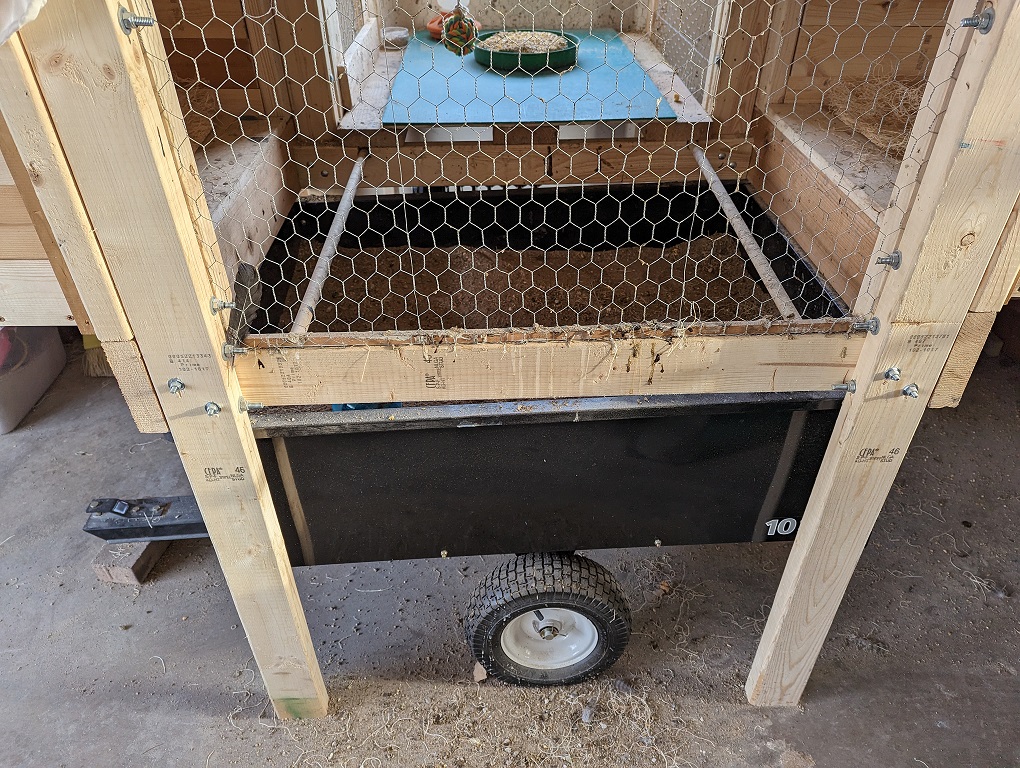
Stemming off the primary vertical coop I placed a pair of roost boxes with enough space to house all four chickens at the same time, and a horizontal platform that provides access to the exit window. This platform also provides a good level surface for water and food. I affixed a plastic corrugated panel to the floor of the horizontal passage to help prevent spilled liquid from sitting directly on the wood to prevent molding.

Revelation #1: I had no idea how dusty chickens are. Had I have known prior, I would not have housed them in the garage. Within a week of the chickens being introduced to the coop the entire garage was coated in what looked like 10 years of dust. I am considering partitioning off the coop from the rest of the garage by hanging a series of shower curtains to hopefully localize the dust. For now, a sheet helps somewhat.
Revelation #2: One benefit of housing the chickens in an internal coop is that they have much better protection from the cold. In December of 2022 we went through a 2-week period in which the temperature was well below freezing. In fact, the daily temperature lows ranged between -10 to 10 degrees Fahrenheit. I feared this was too extreme even for cold hardy chickens. We installed an oil filled radiator space heater, a ceramic heat lamp, and a heating lamp which allowed us to maintain a localized temperature around freezing (32 degrees Fahrenheit). Despite the supplemented heating, the chickens water dish would freeze on the coldest nights. My electricity bill for that period was insanely high – the highest ever.
Revelation #3: The vertical section of the coop would benefit from another access door for cleaning and maintenance purposes. I originally envisioned accessing the coop interior by removing the cart and ducking under the walls to stand within the vertical coop interior. From this position I would be able to access and clean all the interior surfaces. I saw no flaws in this vision until after the chickens started pooping everywhere. After that, the thought of standing up in that confined poop splashed cage seemed pretty gross. I am considering adding a new access door this Spring.
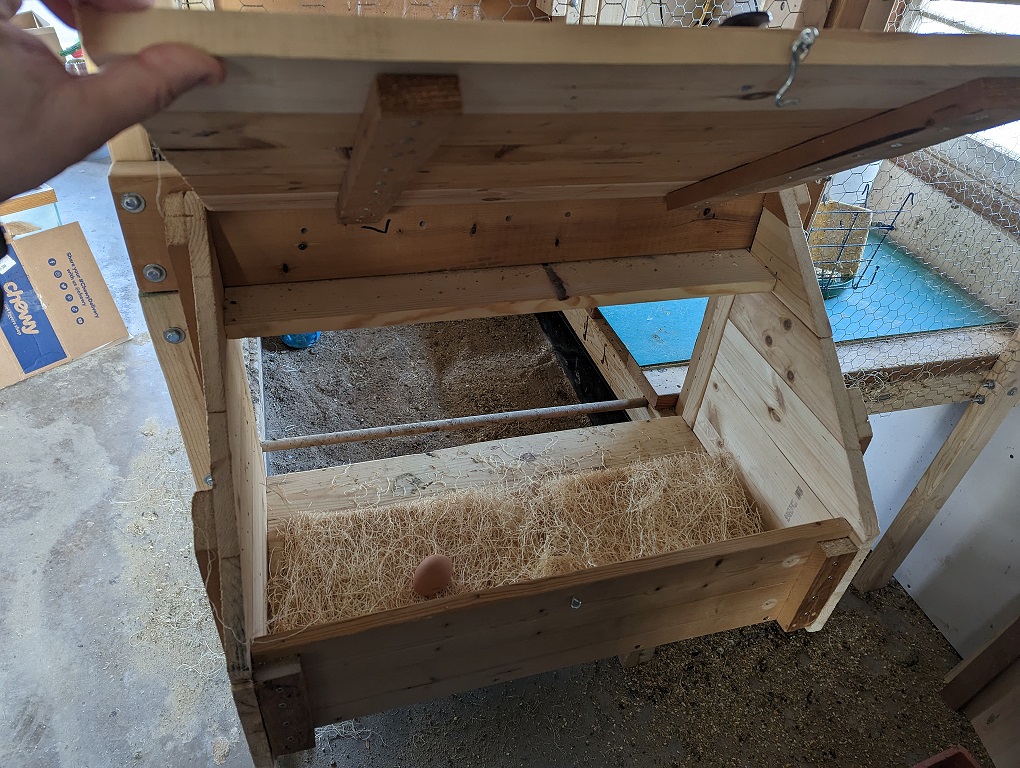
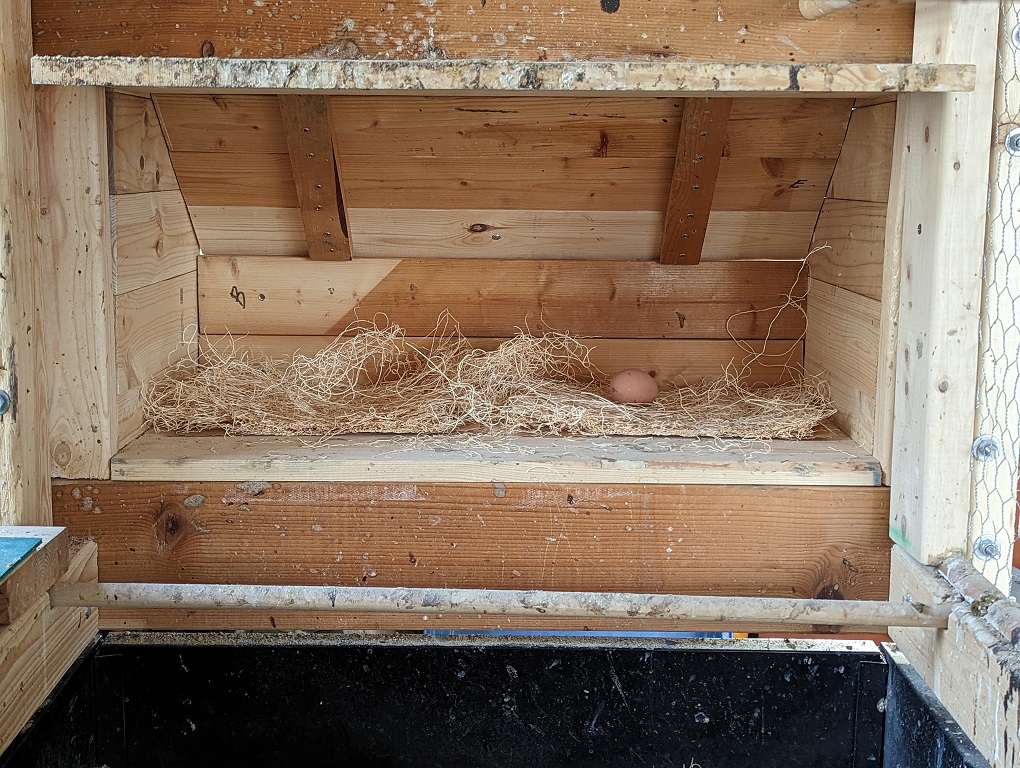
Revelation #4: The nest boxes could use a lip to help hold the bedding in place. In December one of the chickens, Roty (bottom of the pecking order) started laying eggs. The other chickens, for whatever reason, shred the nesting mats and kick them out into the sand cart. Once in January poor Roty laid her egg on the matting in the sand. One of the chickens had jumped on the egg and broken it. Luckily, the broken egg was discovered before the chickens realized its contents could be eaten. I have heard that once chickens recognize that they can consume the contents of eggs they will intentionally break them open for a snack.
 Mad Walshs