11/6/2026
What are Madagascar Hissing Cockroaches?
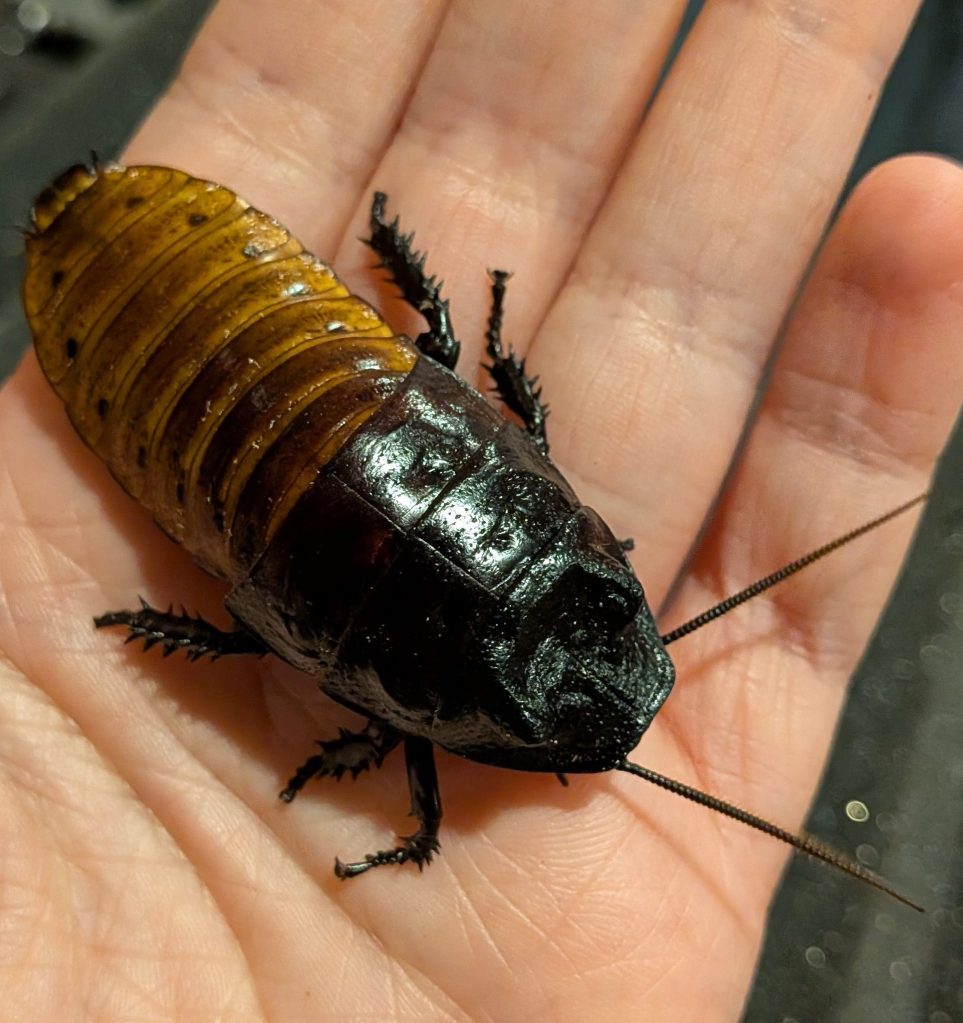
Madagascar hissing cockroaches (Gromphadorhina oblongonota) are a species of large cockroach from Madagascar. As adults they can be up to 3 in long making them one of the largest species of cockroach. They are known for the hissing sound that they make by pushing air out of small holes along their body called spiracles. Males hiss more often then females, but either will hiss when disturbed. With proper husbandry they can live for 3-5 years in captivity
Habitat
Hissing Cockroaches are very tolerant of habitat conditions, so there are many ways to set up and enclosure that they can live in. This guide will focus more heavily on a more naturalistic habitat as it often looks nicer and provides more enrichment.
Hissing cockroaches can be kept either alone or in groups. If you want to prevent babies, having a single cockroach is the most effective way.
The substrate should be something that can hold moisture, such as coconut coir or peatmoss. This can be mixed with or covered with a layer of wood (such as aspen chips, cypress chips, or orchid bark) to help ensure drainage. The substrate should be kept moist but not wet (this can be maintained by periodic misting). If desired the substrate can be set up as bioactive to prevent the build up of waste.
They can be kept in glass enclosures or plastic bins successfully. They are very good at climbing so any enclosure should have a lid to prevent escapees. If you have a mixed gender colony babies are likely, so it is also important to ensure there are no small gaps that the babies can squeeze through.
Having things for them to hide under and climb on is also important, particularly with larger populations. Providing more climbing surfaces allows the cockroaches to spread out more and better escape from each other during conflicts, reducing stress and potential for injury. Cork bark, birch rounds, egg carton, sticks and coconut shells are all good options for hides and climbing structures.
Enclosure Sizing
The minimum starting size for an enclosure would be about five gallons for 1-2 adults, though surface area is more important than volume. If there are too many males for the area provided they may fight and injure or kill each other. The more cockroaches the more space needed.
Feeding
Madagscar hissing cockroaches are not picky with what they will eat. Many people offer dog kibble which is an acceptable part of the diet however, should be supplemented with additional fruits and vegetables. Dog food also has the potential to attract pests such as grain mites and mold, so if used, it should be changed out often.
Other options for food include fruits, vegetables, fish food, insect diets, scrambled egg (no added salt or seasoning). Vitamin C is important to them so foods that are rich in it (such as oranges), should be regularly provided.
Temperature
Madagascar hissing cockroaches are fairly temperature tolerant. They can be kept between the temperatures of 70-90 Fahrenheit (21-32 C), though 75-85 Fahrenheit (24-29.5 C) is more ideal.
If possible, they seem to prefer having a temperature gradient so they can choose whether to be warmer or cooler.
Sexing
Once they reach adult hood it is easy to determine the sex of a Madagascar hissing cockroach. Males have thicker antennae, typically have larger bodies, and have distinctive “horns” on the back of their thorax. They are also more likely to hiss unprompted.
Females typically have thinner antennae and almost no “horns”.
Breeding
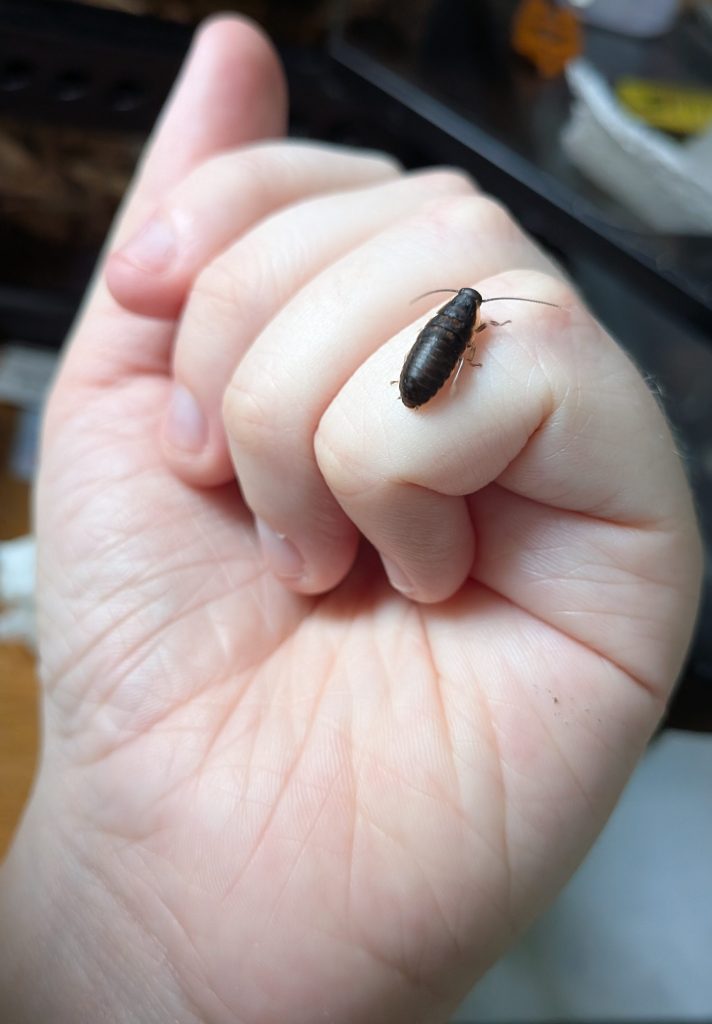
Breeding hissing cockroaches is generally very easy as long as there is at least one male and one female, enough food, and a warm enough temperature.
Female hissing cockroaches carry their eggs in their abdomens for about 2 months (time can vary based on temperature) before the baby roaches emerge. They will typically have 10-40 babies (nymphs) at a time. These nymphs will continue to grow for about 6 months before becoming adults themselves and being able to mate.
The eggs are in a structure called an ootheca. It is not uncommon to see these oothecas discarded in the tank if they were unfertile or if there was some other issue. The discarded oothecas a may be eaten by the roaches in the tank in order to reclaim the nutrients so can safely be removed or left in the enclosure.
Handling
Madagascar hissing cockroaches are very handleable. Some who are not used to handling may hiss when picked up, but do not seem to upset once in a hand. They cannot bite. They may attempt to nibble on fingers, particularly if they smell like food, but this only feels like a gentle scraping or light pressure if noticed at all. The spines on their legs are quite sharp, but unless being pressed on directly are unlikely to cause harm.
The cockroach themself is more likely to be injured, but this can be prevented with minor precautions, namely:
- Hold them over a close padded surface- they are a heavy bodied insect so long falls or falls onto a hard surface could crack their exoskeleton resulting in severe injury or death
- Avoid grabbing antennae or legs as it could injure them
Things you May Encounter
- Injuries- When injured, a hissing cockroach will leak hemolymph (their version of blood), which appears as a clear, slightly milky fluid. While most minor cuts will heal on their own, it is possible to stop the leak by adding a fine powder such as corn starch.
- Mites- Mites are incredibly common with hissing cockroaches. Usually these mites are beneficial and help keep the enclosure free of mold and waste.
- Uterine prolapse- A rare complication of giving birth is uterine prolapse in which part or all of the uterus ends up outside of the abdomen. If present the uterus will look like a small pale yellow balloon sticking out of the rear end of the cockroach. If it is only a small portion, the issue may resolve on its own given time. For treatment, the female should be isolated in a warm, clean, humid container to prevent infection or tankmates interference, then honey or concentrated sugar solution can be applied to the uterine tissue. If all goes well this will shrink the tissue and allow it to return to its proper place. Some sources mention using a hemorrhoid cream to shrink the tissue though this is no longer recommended. If more than just the uterus has prolapsed, chances of recovery are miniscule, and its best to just focus on keeping her comfortable.
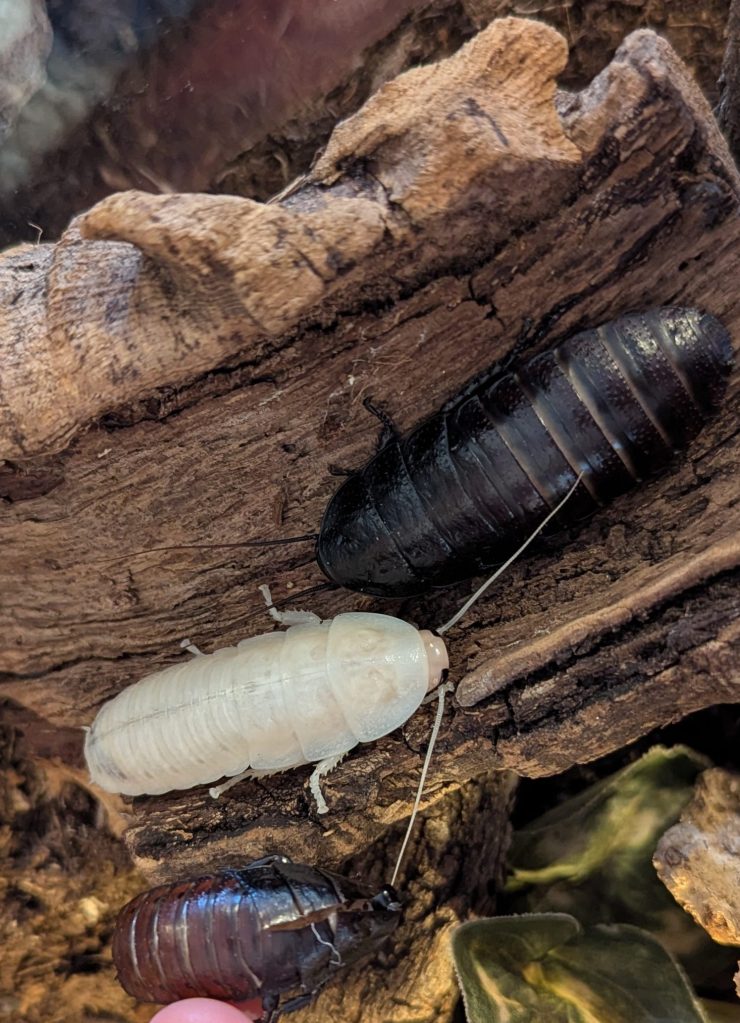
- Molting- While they are growing, cockroaches molt or shed their exoskeleton several times. These exoskeletons may be eaten before you every see them, but if found they look like a hollow cockroach with the back split open. You may also see freshly molted cockroaches which will look very white. After molting their exoskeleton is soft and more prone to damage so they should not be handled until they look completely normal again.