10/31/2024
What are Mourning Geckos?
Mourning geckos (Lepidodactylus lugubris) are a small species of lizard they can grow up to 4 inches with roughly half being tail. One of the most notable traits of the species is that they are almost exclusively female with new babies being born through a natural cloning process called parthenogenesis. This means that as long as conditions are right your mourning geckos will lay eggs and lots of them.
Habitat
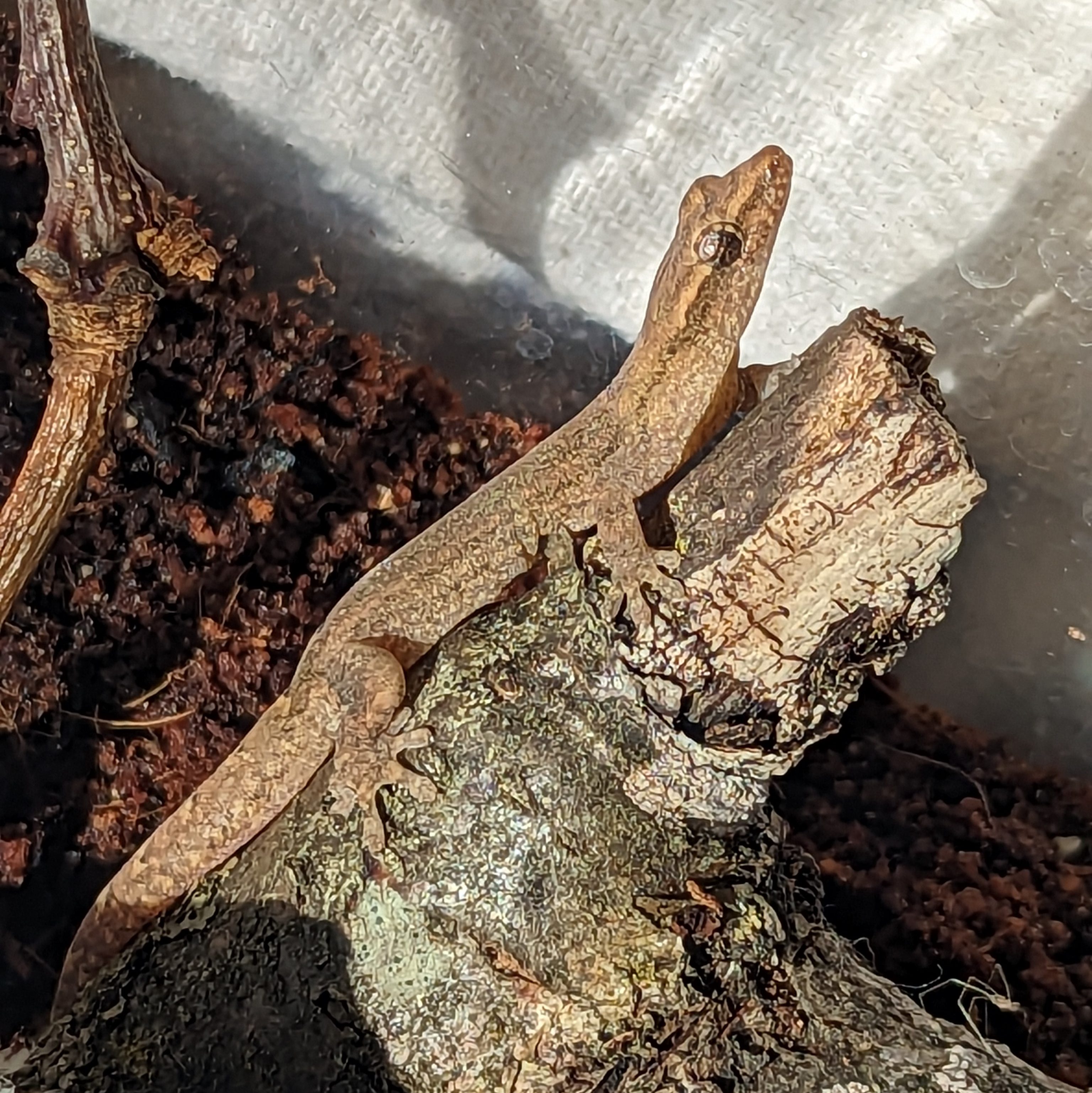
Due to their speed, small size, and fragile nature, mourning geckos typically do best in a bioactive enclosure where not as much enclosure maintenance is necessary. They do best at a higher humidity (60-80%) so a more tropical environment is ideal. They will lick water droplets of of enclosure surfaces, so if enclosure is misted daily a water dish is not necessary. Make sure to use water conditioner if using tap water, filtered water, store bought water, or any other water that could contain chlorine or other potentially harmful chemicals.
In terms of tank decorations/fixtures/accessories/etc. it is important to consider that they are a shy, arboreal species. They need places to hide and places to climb. They can climb practically anything, but tend to feel more secure if there is a rougher texture. As far as hide are concerned, they just have to be big enough for the gecko to safely fit. They will squeeze themselves into the gaps between sticks or rocks so make sure everything in the enclosure is stable and will not crush them. Plants, such as Bromeliads, Tillandsia xerographica, and ponytail palms can serve both functions. One thing to be aware of with plants is that the mourning geckos will lay eggs in/on the leaves so be careful when moving them.
Enclosure Sizing
Mourning geckos are social and tend to do better in a group, so I recommend always having at least two together, ideally of similar size to avoid accidental injuries. I would recommend at least 10 gallons for a pair with roughly 3 additional gallons for every extra gecko, however if there are lots of climbing surfaces and hiding spots slightly smaller can be acceptable. Since they are avid climbers, vertical space is more important than horizontal and, if possible, hides and places to climb should be available the entire way up.
Additional consideration should be given to any holes, gaps, or openings in the enclosure as there is potential for babies (or adults) to escape.
Feeding
Mourning geckos in the wild primarily eat fruit, nectar, and insects, so their captive diet should be similar.
Commercial Foods
Commercial gecko foods are available and work well, but make sure the chose food is for fruit or nectar eating geckos. Food for more insect eating species may not provide proper nutrition for a mourning gecko. We personally use Pangea food but others are available. Mourning geckos only eat a small amount so while commercial foods are more expensive, they last a long time. An added benefit of commercial foods is that they typically have all of the required nutrients so supplements are not necessary. Note: It may still be beneficial to provide occasional calcium supplements (without D3) once every week or two during periods where your geckos are laying lots of eggs, particularly if egg shells are particularly thin.
Home-Prepared Foods
If you are not using a commercial diet there are three main parts to consider: fruit, protein, and vitamins/minerals.
Fruit should make up the main portion of their diet and is most accessible to them if pureed. Some safe options include:
- Guava
- Papaya*
- Mango
- Watermelon
- Honeydew melon
- Blueberries*
- Strawberries
- Cherries (Pits removed)
* Some fruits have high pectin and will congeal if not eaten quickly
Vitamin and calcium supplements can be mixed into the fruit puree. Both types of supplements are available for purchase for reptiles. I personally use ZooMed’s supplements, but other brands are available. If you do not provide UVB lighting for your mourning geckos, make sure that either the calcium or vitamin supplement has vitamin D3 added, it is necessary for the processing of calcium.
Calcium should be supplemented once per week and only a small amount is necessary. Vitamins should be supplemented once every two weeks, and, again, only a small amount is necessary. Most supplements will have guidelines on the amount to add.
Your geckos will also need protein. This can be done by providing live prey (ie. small crickets, dwarf isopods) or through other sources (ie. scrambled eggs, thiaminase free fish, insect/fish/egg meals). Both options are valid and have their own benefits.
Temperature
Mourning geckos do best at temperatures between 75-80 Fahrenheit (23-26.5C), however they can tolerate temperatures down to 65F (18C).
While it is not strictly necessary, I also strongly recommend providing a basking spot that reaches temperatures around 85F (29.5C).
Lighting
Mourning geckos do not have any specific lighting requirements, however providing a UVB light can benefit calcium metabolism.
Breeding
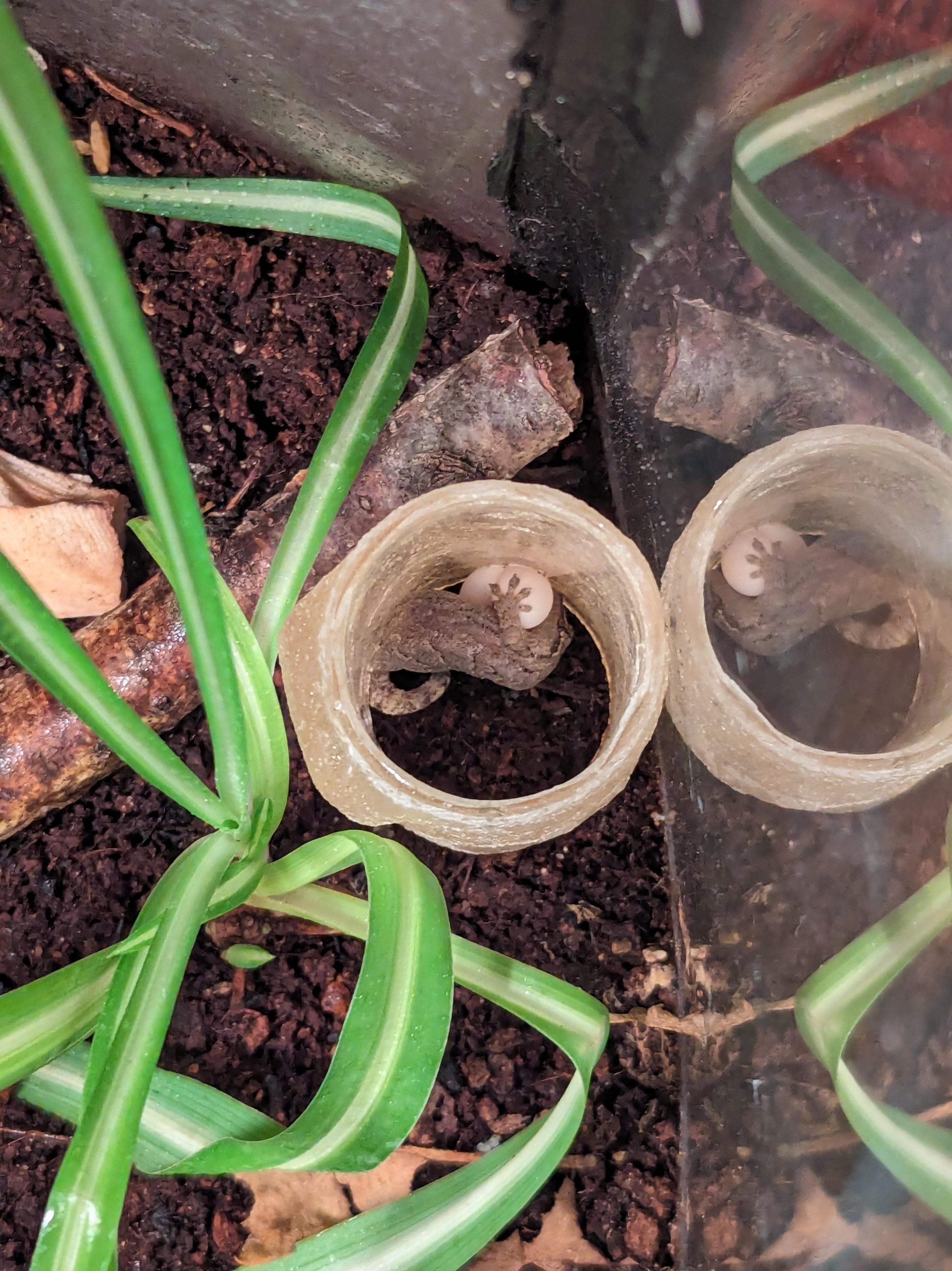
Breeding mourning geckos is not much different from keeping mourning geckos. Due to their parthenogenesis (ability to produce offspring without a mate), they will just lay eggs after reaching maturity. Adult geckos may still display mating behaviors which is thought to help stimulate the egg laying process, but it is an unnecessary step. It is best not to stress a mourning gecko when she is carrying eggs as it could result in her releasing them early, often resulting in the eggs failing.
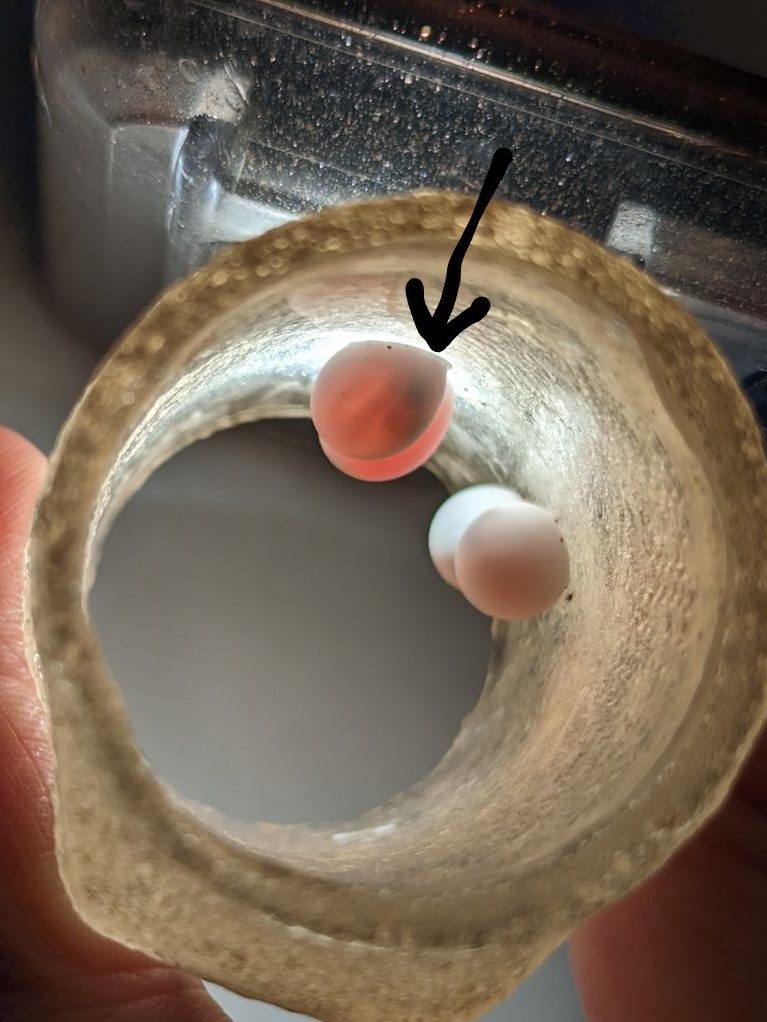
Like most species of geckos they typically lay two eggs at a time, however typically 25-50% of eggs will go bad before they hatch. It is possible to see if an egg is viable by shining a bright light through it, aka candling the egg. If the egg is newer it may appear pinkish or have visible blood vessels under the shell. Further developed eggs may have a visible embryo. Nonviable eggs typically have a yellow hue and will lack blood vessels. Keep in mind that it may take a few days for blood vessels to develop to a noticeable level. There is nothing wrong with holding on to a dud egg until you are certain it won’t hatch.
Eggs will often be adhered to a surface, so moving or removing them is not always an option. Eggs can be successfully incubated in the adult enclosure or in a separate incubation enclosure. If incubating them in the adult enclosure not much is needed. They need the same temperatures and humidity as the adults. Spraying the eggs with water directly or letting them sit in standing water should be avoided, excessive water around the eggs could encourage bacterial or fungal growth, drown the eggs, or lead to mineral build up on the egg shell. If using a separate incubation chamber for the eggs the same conditions should be maintained.
If possible, babies should be kept separate from the adults. The adults typically will not try to eat the babies, however they may nip which could result in tail loss or other injuries. Note: nipping and tail loss can still occur in geckos of similar sizes (particularly with babies) but is less common and typically less damage is done. Tails will regrow but have a different appearance
Sexing
If you have a mourning gecko, they’re probably female. Males can occur but are both incredibly rare and infertile. It is fair to assume all mourning geckos are female unless proven otherwise.
Handling
Mourning geckos are not particularly handleable. They are small, quick, and shy, a combination that makes it very easy to lose them. The safest option for the geckos is to let them stay in their enclosure whenever possible and simply observe them.
Things you May Encounter
- Escaped Gecko- Usually it is pretty easy to find escaped mourning geckos. They will often hide until night then climb up the walls where they can be easily seen and captured.
 Mad Walshs