11/6/2026
What are Satanic Leaf-tail Geckos?
Satanic leaf-tail geckos (Uroplatus phantasticus) are a small species of lizard they can grow up to 4 inches including tail. Given proper husbandry, they are known to live around 10 years in captivity. They are named for their distinctive tail that mimics the shape and sometimes color/patterning of a leaf. The satanic part comes from the ridges on their head that look similar to horns. They are a very docile and timid species that can become easily stressed by sudden changes in their environment.
Habitat
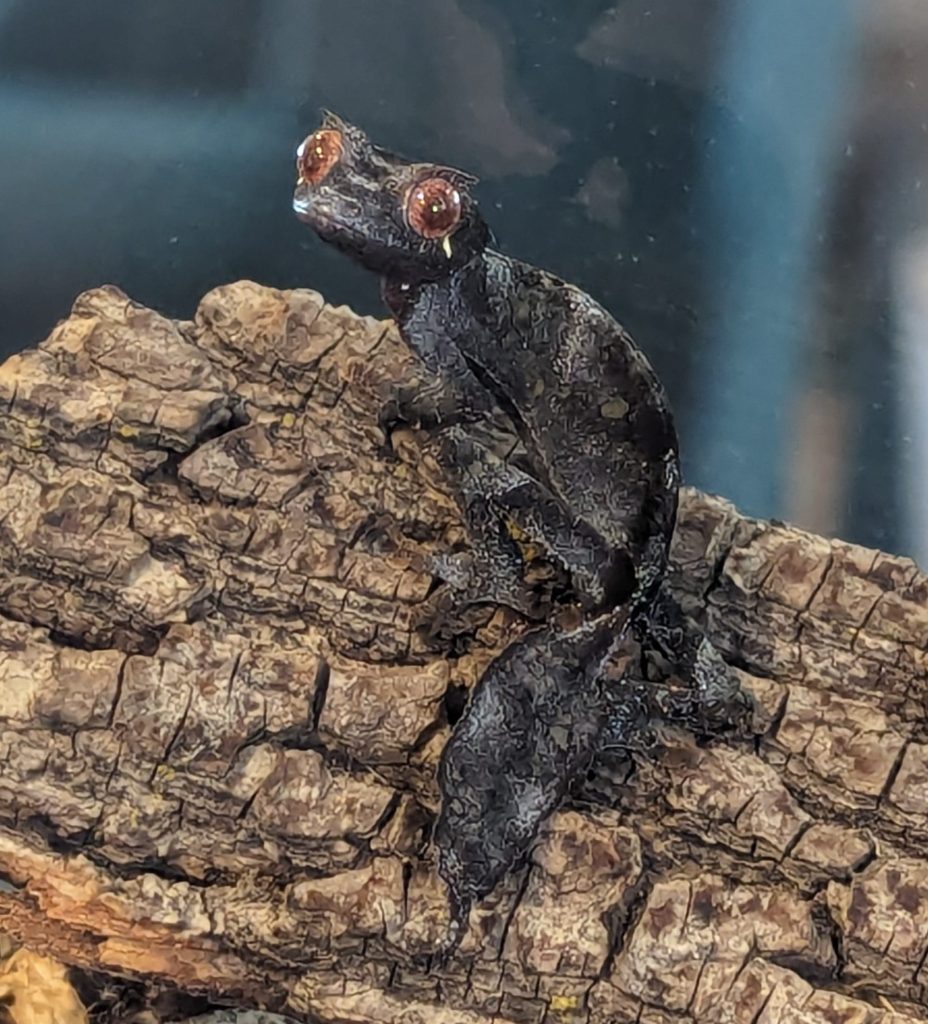
Due to their nervous nature, a bioactive enclosure can be beneficial as it requires less frequent large scale enclosure cleanings. The substrate should be something that holds moisture well and should be kept damp, but not soaked. In general humidity should be kept around 60-75% during the day and 80-95% at night. Mist the tank at night to provide water droplets that they will lick for water then allow to dry during the day. Additional water can be provided in a shallow dish. Make sure to use water conditioner if using tap water, filtered water, store bought water, or any other water that could contain chlorine or other potentially harmful chemicals.
In terms of tank decorations/fixtures/accessories/etc., it is important to consider that they are a shy, arboreal species. They need places to hide and places to climb. They can be clumsy so having some sticks or bark with a rough, easy-to-hold, can help them feel more secure. Adding plants, such as pothos, ficus, or ferns, is a great option for maintaining humidity as well as providing places to climb and hide. If cave type hides are provided, any holes or openings should be large enough for the the gecko to easily pass through to prevent them from getting stuck.
Enclosure Sizing
To ensure adequate space, the minimum recommended size for an enclosure is 18x18x24in for an individual. Vertical space is important to allow climbing. Satanic leaf-tail geckos should be housed individually except for breeding pairs which may be housed together with monitoring to ensure they are not causing each other harm or stress. Males should not be housed together.
Feeding
Satanic leaf-tail geckos are insectivores, so should be fed safe feeder insects of an appropriate size. Small crickets, silkworms, and captive bred snails* can be good options. Small roaches can also be fed, but some individuals seem to have difficulty eating them. All feeders should be gut loaded (fed nutritious food) before being offered to your geckos to minimize any nutritional gaps in their diet. Adults should be fed the equivalent of 5-10 small crickets every other day. Juveniles can be fed more frequently. Feeders can be placed in the enclosure in a small dish to prevent them escaping. Uneaten feeders should be removed in the morning.
Calcium and multivitamin supplements should also be given regularly (in general multivitamin can be offered every 2 weeks and calcium can be offered every week, but verifying with product information or reptile-veterinary advice is advised). They are unlikely to consume the supplements on their own, so dusting the feeders with the supplement will be more effective. While they can get their required D3 through supplementation, we strongly recommend providing supplements without D3 and providing a UVB light.
* wild snails can carry dangerous parasites that can infect you or your animals and should never be fed or handled without proper precautions.
Temperature
Satanic leaf-tail geckos do best with a day time temperature between 68-75 Fahrenheit (20-24C) and a night temperature between 60-68 Fahrenheit (16-20C)
The temperature should be kept below 80 Fahrenheit as it can be dangerous to them. If the room they are in gets too warm, cooling may be necessary.
Lighting
While they can get D3 through dietary supplement it is highly recommended to instead provide gentle UVB lighting. For example: the 13W tropical Exoterra UVB bulb or the 13W 5.0 UVB bulb from ZooMed (other comparable bulbs should also be acceptable). Shaded areas should be available for them to get out of the direct light. Plants and hides should be able to provide this.
No basking light or night time lighting is recommended.
Breeding
Coming soon…
Sexing
The only way to know for sure whether your gecko is male or female is to wait for them to hit maturity and see if there is a bulge at the base of their tail. However, there are a few indicators that can provide hints.
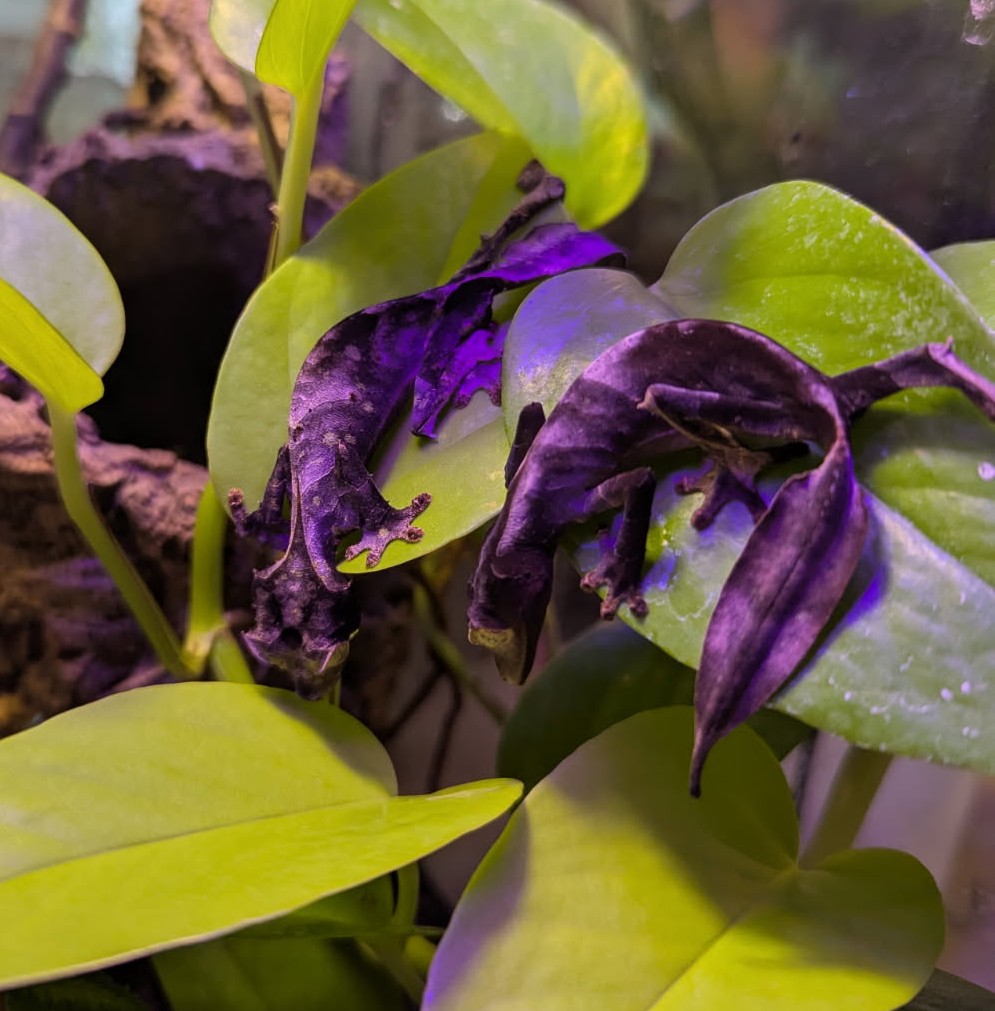
Teardrop scales– Most male satanic leaf-tail geckos will have white scales at the corner of each eye. Some females will also have these scales and some males will not have them, so it is not conclusive on own
Tail Shape- In general, males have a more tattered looking shape to their tail while females will have smoother edges
Handling
Due to their nervous nature, overhandling can cause lead to stress and related problems such as tail dropping, so they should only be handled when necessary.
When attempting to lift them they should be allowed to climb onto your hand rather than being pulled off of the surface they are on. Never pull on their limbs or tail as they could become damaged. As they can be quite clumsy it is important to support them well and make sure they cannot fall and become injured.
Things you May Encounter
- Dropped tail- Satanic leaf-tail geckos are quick to drop their tails when stressed. This could be due to rapid changes in their enclosure or lighting, overhandling, issues with a tankmate, or anything else they find stressful. While on its own this is not life threatening, it is important to determine to cause so that the stressor can be corrected or avoided. The tail will slowly grow back but will never regain the leaf like appearance. While the tail is gone they will also be more susceptible to nutritional deficiencies since the tail serves as s storage that they can use as needed.
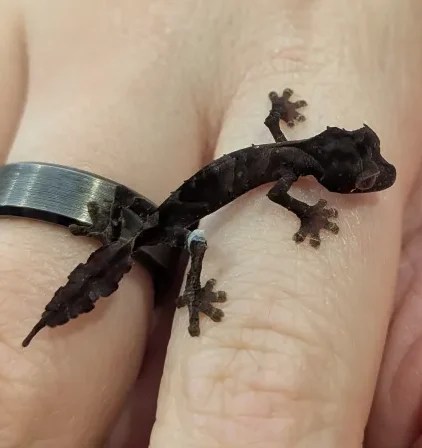
- Shedding issues- Satanic leaf-tail geckos can be prone to stuck shed, particularly on their toes. This is often a case of inadequate humidity. If this stuck shed forms a ring around a body part it can cause further issues including deformation. If this is noticed it can be gently removed by moistening with water and carefully using a tweezers or cotton swab. Often with the shed rings it is enough to tear the ring so it can fall off on it’s own. It is also important not to stress them too much during this procedure. If you do not feel confident removing it yourself a reptile veterinarian would be able to help. Note: Do not pull off shed unless it is clear that it is stuck. Removing it too soon could cause damage to the skin underneath. In a normal shed, the gecko will remove and eat the shed to regain some nutrients.

