10/31/2024
What are Vinegaroons?
Vinegaroon in the colloquial term for whip scorpions. Unlike the scorpions that most people are familiar with, whip scorpions do not have stingers or venom. Instead they have an antennae-like tail that they use to feel their surroundings and the ability to spray acetic acid (vinegar) from the base of their tail when threatened. This acid is mostly harmless but has a strong smell and could sting if it got into someone’s eyes or a cut.
There are many species of whip scorpion most of which have very similar care requirements, however this care guide is focused on the species Mastigoproctus giganteus or the Giant Vinegaroon.
Habitat
Vinegaroons require high humidity (70-80%) and lots of space to burrow. I would recommend at least four inches of substrate, but they will use more if it is provided. They do well in a tropical bioactive enclosures as it limits how often their burrows need to be disturbed. A substrate that maintains burrows, such as sphagnum moss, soil, or coconut coir with added fibrous material such as coconut husk or tree fern. If using soil make sure you are not introducing contaminants, including, pests, fertilizers, pesticides, or other chemicals.
Vinegaroons also appreciate hides and highly textured, easily climbable materials to explore.
Enclosure Sizing
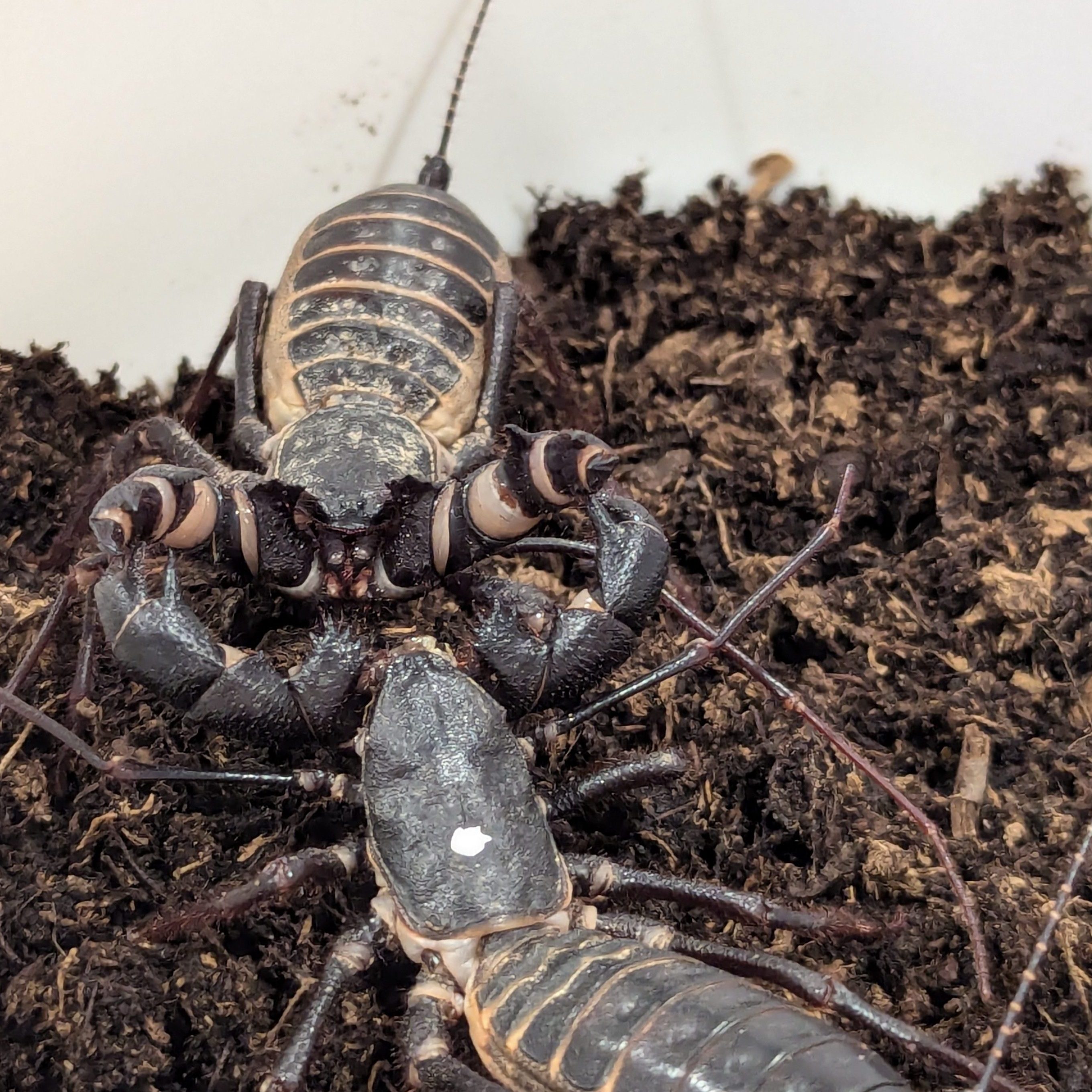
A five gallon enclosure should provide ample space for your vinegaroon. Too much larger and they could have trouble finding their prey.
Vinegaroons should not be housed together as they are very territorial and will cannibalize each other if given the chance.
Feeding
Vinegaroons are predatory arthropods so most will only recognize live prey. They eat other arthropods with some common prey options being roaches, crickets, scorpions, or other invertebrates their size or smaller. Some may be nervous of larger prey. If that is the case offer smaller prey items.
Feeding them once or twice per week is usually a good frequency. If they are overfed or just had a large meal, their abdomen will expand and the gaps between scales very visible on the sides. If they are underfed, their abdomen will be very thin and none of the gap will be visible. Ideally, the gap should be slightly visible and food can be given more or less often to maintain it.
Temperature
Vinegaroons do best at temperatures between 72-85F (22-29.5C). If temperatures fall much below that range, supplemental heating should be provided. Under tank heating should not be used as their instinct is to burrow if it is too hot. Side or surface heating is safer.
Handling
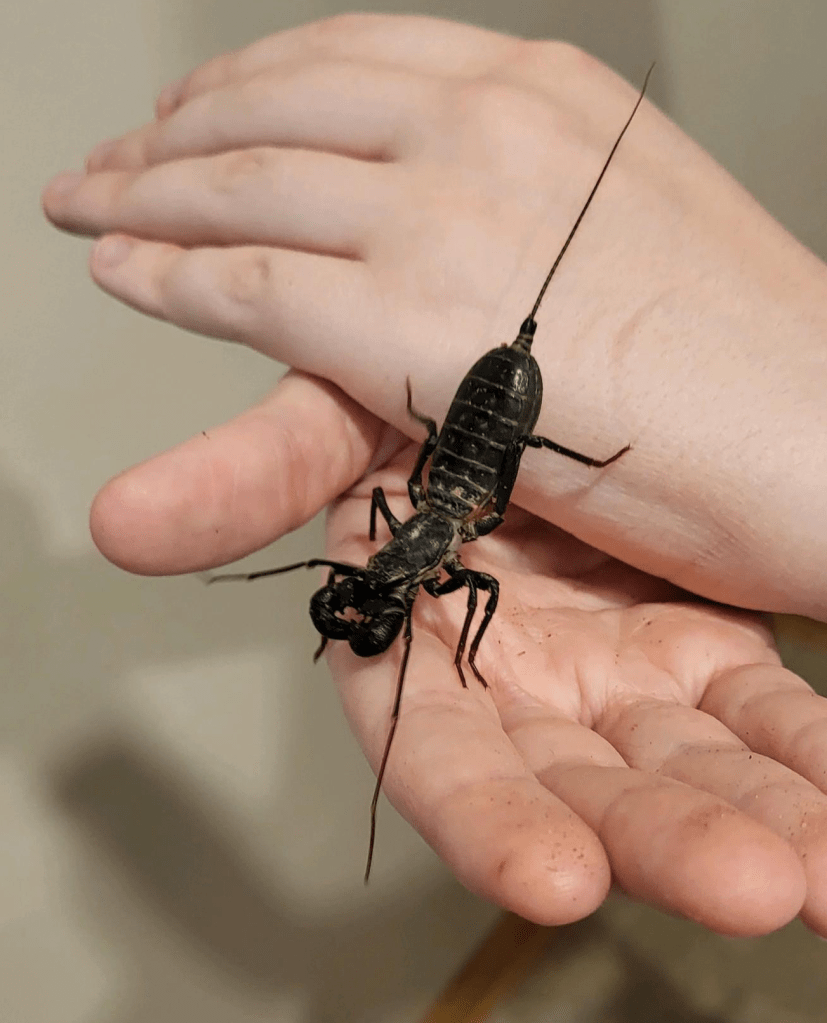
Handleability depends entirely on the individual. I have encountered vinegaroons that seem to enjoy being handled and show no signs of stress and ones that become defensive as soon as they see you. If you do decide to hold your vinegaroon they should be held over a table or close surface so that if they fall they will not be damaged.
While vinegaroons cannot do any major damage to humans, they do have fangs and claw-like pedipalps that can bite and pinch. This is not life threatening, but can be painful.
Things you May Encounter
- Vinegaroon injuries- Vinegaroons, when injured will leak hemolymph (their version of blood), which appears as a clear, slightly milky fluid. While most minor cuts will heal on their own, it is possible to stop the leak by adding a fine powder such as corn starch.
 Mad Walshs